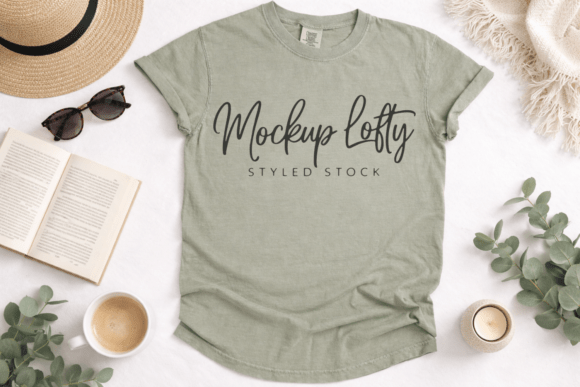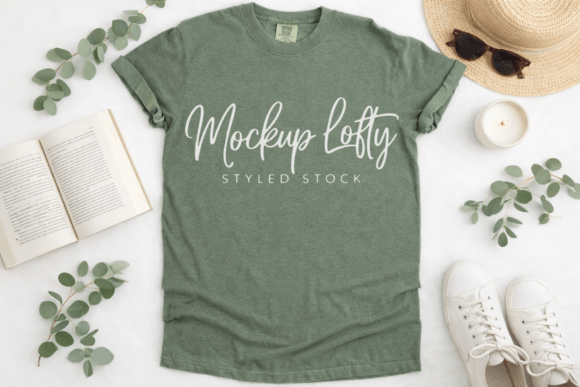
C1717 Moss Flat Lay T-shirt Mockup: Elevating Design Presentation Through Intentional Simplicity
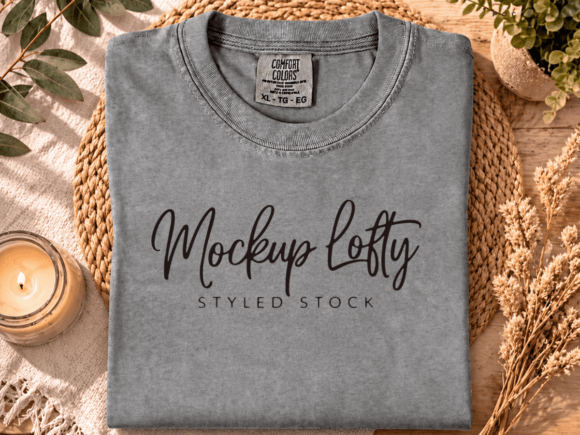
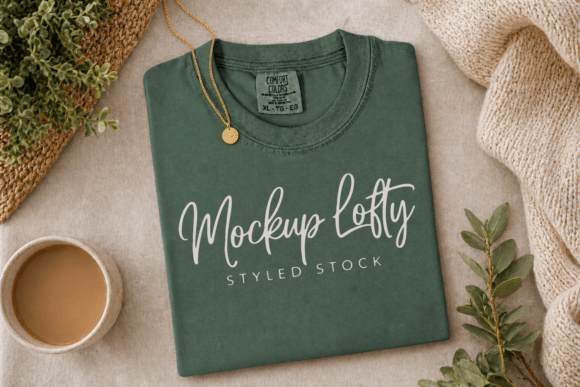
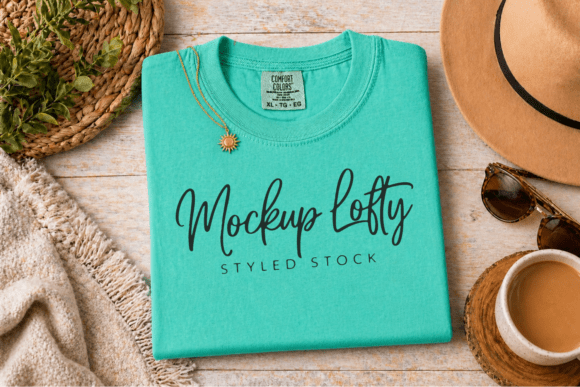
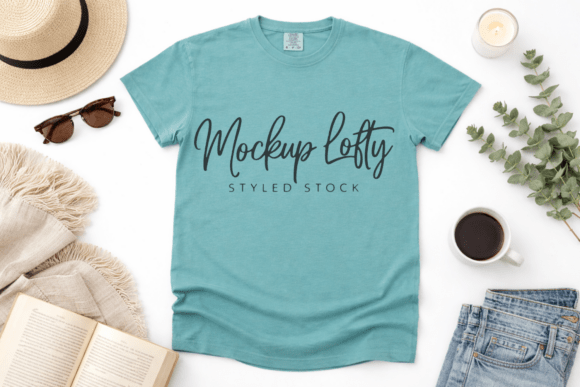
Design presentation is rarely about the garment—it’s about context, credibility, and quiet confidence. The C1717 Moss Flat Lay T-shirt Mockup serves this principle with remarkable fidelity. Unlike high-gloss studio shots or stylized lifestyle scenes, this mockup leans into restraint: a grounded, uncluttered composition that foregrounds your artwork while anchoring it in tangible realism. Its moss-colored base isn’t merely aesthetic—it’s psychological. A soft, organic neutral that evokes calm, authenticity, and tactile warmth—qualities increasingly sought after across digital marketplaces, brand portfolios, and creative pitches.
Why Flat Lay Composition Matters Beyond Aesthetics
A flat lay t-shirt mockup transcends visual convenience—it functions as a cognitive bridge between abstraction and perception. When a designer uploads a vector illustration or hand-drawn motif, viewers don’t just see pixels; they infer texture, drape, scale, and wearability. The C1717 Moss Flat Lay T-shirt Mockup supports that inference through deliberate physical cues: subtle fabric folds at the collar, gentle curvature along the hem, and natural shadowing beneath the sleeves—all rendered at 300 DPI in JPEG format for print-ready clarity. These aren’t decorative flourishes; they’re perceptual anchors that help buyers mentally place the design on an actual body, even without a model.
This matters especially for platforms where attention spans are measured in seconds—Etsy listings, Shopify product pages, Instagram carousels, or pitch decks shared with retail buyers. A cluttered background or artificial lighting distracts from the core message: what does this look like when worn? By removing text, watermarks, and extraneous props, the mockup ensures your design remains the sole subject of interpretation—not the staging.
Neutral Grounding as Strategic Brand Alignment
The “Moss” designation refers to more than hue—it signals intentionality in tone and application. Moss sits between sage and olive, cooler than khaki but warmer than slate. It avoids the sterility of pure gray and the assertiveness of black or navy, making it exceptionally versatile across industries. A sustainable apparel brand might pair it with earth-toned typography and linen textures; a tech startup launching branded merch could layer minimalist sans-serif logos over its surface without visual competition; a wellness educator might use it to present affirmational quotes—soft enough to soothe, grounded enough to resonate.
This neutrality also extends functionally. Unlike stark white or saturated backgrounds, moss provides natural contrast for both light and dark designs without requiring manual shadow adjustments or brightness tweaks. Light text remains legible; deep charcoal prints retain depth; pastel gradients hold their integrity. That consistency reduces post-production time—a tangible benefit for creators managing multiple SKUs or seasonal drops.
Real-World Use Cases Across Diverse Workflows
- Print-on-demand sellers: Upload designs once to the C1717 Moss Flat Lay T-shirt Mockup, then reuse the same base across variations (e.g., different colors or placements) without re-shooting or reshooting. Its commercial-use license permits unlimited distribution—critical for scaling Etsy shops or Redbubble storefronts.
- Brand identity development: Present cohesive collections—not isolated tees, but coordinated visuals that suggest a unified voice. Pair the mockup with complementary flat lays (e.g., tote bags or notebooks on the same moss surface) to demonstrate cross-product harmony before physical samples exist.
- Educators and students: In design courses or portfolio workshops, the absence of branding allows focus on compositional fundamentals—balance, negative space, hierarchy—without distraction. Students learn to critique design decisions rather than stylistic choices imposed by the mockup itself.
- Sublimation and DTF practitioners: Because the mockup renders fabric grain and seam structure accurately, it helps anticipate how heat-transfer processes will interact with cotton-blend surfaces—especially useful for testing bleed, opacity, and edge sharpness before committing to costly runs.
Technical Integrity Meets Creative Flexibility
At 300 DPI resolution, the C1717 Moss Flat Lay T-shirt Mockup satisfies dual demands: screen clarity for web previews and dimensional fidelity for printed catalogs or press kits. JPEG format ensures broad compatibility—no need for specialized software or layered PSD files. Designers using Canva, Figma, Affinity Photo, or even basic photo editors can insert artwork via smart object replacement or simple layer masking. No plugins, no subscriptions—just drag, drop, and refine.
Crucially, the file arrives clean and production-ready. There are no embedded tags limiting redistribution, no opaque overlays obscuring detail, and no forced branding undermining your authority. This isn’t a placeholder—it’s infrastructure. For agencies building client presentations, it eliminates disclaimers like “mockup shown for illustrative purposes only.” For indie creators, it removes friction between idea and market-ready asset.
Contextual Versatility Without Visual Compromise
While often associated with summer lifestyle branding or outdoor apparel mockups, the C1717 Moss Flat Lay T-shirt Mockup resists narrow categorization. Its strength lies in adaptability—not trend-chasing. A surf brand might pair it with ocean-blue typography and wave-inspired layout spacing; a boutique law firm launching internal culture gear could use it with serif type and restrained margins to signal professionalism without rigidity; a ceramicist selling limited-run artist tees might overlay faint glaze textures onto the moss background—enhancing material storytelling without competing with the shirt itself.
This chameleon-like utility stems from its grounding in real-world textile behavior. The shirt lies naturally—not stretched, not stiffened—suggesting comfort and wear-in. That subtlety communicates value: not just “this looks good,” but “this feels lived-in, considered, human.” In an era where consumers increasingly vet brands through emotional resonance—not just features—the mockup becomes part of the narrative architecture.
Considerations for Thoughtful Implementation
Even refined tools require mindful application. First, recognize that minimalism amplifies imperfections: misaligned centering, uneven contrast, or poorly scaled artwork becomes more visible against such a quiet backdrop. Always preview at 100% zoom before export. Second, while the moss tone suits most palettes, verify color accuracy across devices—especially if your audience relies heavily on mobile viewing. Calibrate your monitor or test exports on varied screens to avoid unexpected shifts in perceived warmth or saturation.
Third, consider layering context intentionally. A standalone flat lay conveys clarity—but adding one contextual element (a single dried eucalyptus stem beside the collar, a folded linen napkin in the corner, a vintage brass compass near the hem) can deepen narrative without sacrificing minimalism. These additions remain optional, editable, and non-destructive—preserving the mockup’s core utility while allowing expressive nuance.
Broader Implications for Visual Communication Ethics
Using a mockup like the C1717 Moss Flat Lay T-shirt Mockup responsibly reflects deeper commitments—to transparency, craftsmanship, and audience respect. It avoids hyperrealism that misleads about fit or fabric weight; it rejects artificial scarcity tactics (e.g., countdown timers overlaid on static images); and it prioritizes legibility over virality. In educational settings, it models how to represent ideas without embellishment—teaching students that clarity is not synonymous with simplicity, nor professionalism with polish.
For business owners evaluating mockup libraries, this distinction matters. Not all “minimalist t-shirt mockups” serve the same purpose. Some prioritize speed over fidelity; others sacrifice versatility for trendiness. The C1717 Moss Flat Lay T-shirt Mockup occupies a middle ground: technically rigorous, ethically neutral, and creatively generative. It doesn’t tell you what to design—it gives your design room to be understood.
Final Reflection: Where Craft Meets Clarity
In the lifecycle of any apparel design—from sketchbook to shelf—the presentation phase carries disproportionate weight. It’s where assumptions crystallize into expectations, where abstract concepts gain physical dimension, and where audiences decide whether to pause, engage, or scroll past. The C1717 Moss Flat Lay T-shirt Mockup doesn’t shout. It listens. It accommodates bold graphics and whisper-thin linework alike. It supports commercial use without demanding commercial compromise. And it does all this while honoring the quiet intelligence of restraint—proving that sometimes, the most powerful statement is made not with addition, but with thoughtful omission.