Christmas PNG Design: What It Is, When It Fits, and How It Compares
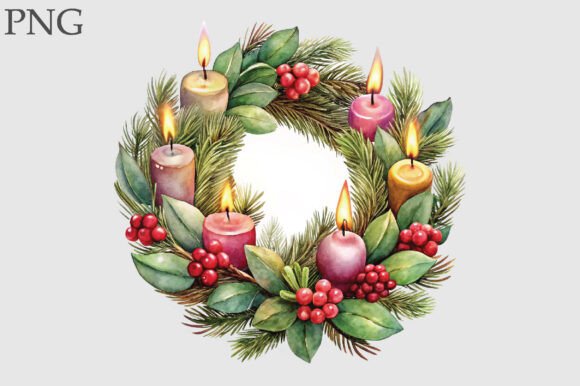
A Christmas PNG design refers to a digitally created holiday-themed graphic saved in the PNG (Portable Network Graphics) file format—specifically optimized for versatility and clarity. Unlike JPEGs or basic web images, PNG files support transparency, lossless compression, and high color fidelity, making them especially valuable for layered design work. The version described—300 dpi at 12×12 inches with a transparent background—is engineered for professional-grade output across physical and digital applications.
What Sets This Christmas PNG Design Apart
The defining traits of this particular Christmas PNG design go beyond aesthetics. Its 300 dpi resolution ensures crisp detail when printed at full size—critical for items like mugs, tote bags, or greeting cards where pixelation undermines perceived quality. The 12×12 inch canvas offers generous working space, allowing designers to scale down without losing integrity, or crop selectively for different aspect ratios. Most importantly, the transparent background eliminates the need for manual clipping or background removal—a time-saving advantage over non-transparent formats like JPG or low-res web graphics.
This isn’t just a festive image—it’s a production-ready asset. That means it’s pre-optimized for compatibility with industry-standard tools (Adobe Illustrator, Photoshop, Canva Pro, Affinity Designer, Cricut Design Space), and structured to integrate cleanly into multi-layered projects. You won’t find embedded watermarks, compressed artifacts, or locked layers—just clean vector-adjacent raster data ready for editing, resizing, or combining with typography, textures, or other elements.
How It Compares With Other Holiday Graphic Options
Not all Christmas-themed graphics serve the same purpose—or deliver the same results. Here’s how this Christmas PNG design fits within broader categories:
- SVG vs. PNG: SVG files are resolution-independent and ideal for web use or cutting machines, but they’re limited to flat shapes and paths. A high-resolution PNG retains subtle gradients, shadows, texture overlays, and anti-aliased edges that SVG often can’t replicate—making it better suited for photorealistic or illustrative holiday art.
- JPEG vs. PNG: JPEGs compress aggressively, sacrificing fine detail and eliminating transparency support. For screen-only sharing (e.g., social media posts), JPEG may suffice—but if you’re printing on mugs, phone cases, or fabric, JPEG artifacts become visible under magnification or in solid-color backgrounds.
- Free web graphics vs. premium PNG assets: Many free resources come in low resolution (72–150 dpi), lack transparency, or include attribution requirements. They may also be oversaturated or stylistically inconsistent. A 300 dpi transparent PNG avoids those constraints while offering predictable scalability and print readiness.
That said, PNG isn’t universally superior. If your workflow relies heavily on editable paths (e.g., for vinyl cutting or embroidery digitizing), an SVG or EPS version would offer more flexibility. And if you’re building a responsive website banner, a lightweight WebP or optimized SVG might load faster than a large PNG—even one compressed well.
Real-World Use Cases and Practical Fit
This Christmas PNG design shines where precision, consistency, and adaptability matter. Consider these scenarios:
- T-shirt printing: Because it includes transparency, the design drops cleanly onto any shirt color without white halos or misaligned edges—no extra masking needed.
- Custom greeting cards: At 12×12 inches and 300 dpi, it prints sharply on standard cardstock, and its transparency allows elegant layering over foil-stamped or textured backgrounds.
- Sublimation on tumblers or phone cases: High DPI prevents blurring during heat transfer, and the absence of background pixels ensures clean edges on curved surfaces.
- Digital invitations or social templates: You can import it directly into Canva or Adobe Express, adjust opacity, add text overlays, or blend with photos—all without degrading quality.
It’s less ideal for ultra-fast prototyping on mobile devices (since PNGs require desktop software to edit meaningfully), or for projects demanding animation (PNG doesn’t support frames like GIF or APNG). Nor does it replace font-based or scalable icon sets when minimalism and typographic harmony are priorities.
Important Technical Considerations Before You Use It
While this Christmas PNG design is built for reliability, real-world usage introduces variables worth acknowledging:
- Color accuracy isn’t absolute. Monitors render RGB values differently; printed CMYK output shifts hues slightly. Always soft-proof in your editing software and request a physical proof from your printer if color matching is mission-critical (e.g., brand-aligned reds or golds).
- Print method affects outcome. Screen printing handles bold outlines well but struggles with fine gradients. DTG (direct-to-garment) preserves subtlety but may mute contrast on dark fabrics. Sublimation delivers vibrancy on polyester but won’t adhere to cotton blends without coating.
- Software matters. You’ll need a computer—not just a phone—to unzip the archive and open the file. Basic viewers (like Windows Photos) display the image but won’t let you isolate layers, adjust blending modes, or export for cutting machines. Tools like GIMP, Affinity Photo, or Photoshop give full control; Canva works for simple placement but limits advanced edits.
- Scaling has limits. While 300 dpi at 12×12 inches gives headroom, enlarging beyond 150% risks interpolation blur. For billboard-sized prints, vector artwork remains the safer choice.
When This Christmas PNG Design Is the Right Choice—and When It Isn’t
Choose this Christmas PNG design if you value:
- Consistent, repeatable quality across multiple product types;
- Efficiency in production (no background cleanup, no resolution guessing);
- Flexibility to adapt the same asset for physical and digital outputs;
- Control over final presentation through editing—not just placement.
Look elsewhere if you need:
- True scalability for massive signage or embroidery patterns (opt for vector sources);
- Animated holiday elements (consider GIF, Lottie, or video alternatives);
- Pre-formatted templates for specific platforms (e.g., Instagram Story dimensions or Etsy listing banners);
- Fonts or editable text baked into the graphic (this PNG contains only the visual element—text must be added separately).
In short, this Christmas PNG design occupies a practical middle ground: more capable than generic web graphics, more accessible than custom illustration, and more production-ready than raw sketches or low-res downloads. It supports intentionality—not just decoration.
Making Your Decision More Confidently
Evaluating a Christmas PNG design isn’t about finding the “best” file—it’s about matching capabilities to your actual workflow, tools, and end goals. Ask yourself: Do I have access to software that opens and edits PNGs? Will this be used primarily for print, digital, or both? Is color fidelity or edge sharpness more critical than file size or animation? How much time am I willing to invest in prep versus relying on plug-and-play readiness?
There’s no universal answer—but understanding what this Christmas PNG design delivers—and where its boundaries lie—helps avoid mismatched expectations. It excels in stability, clarity, and cross-platform utility. Where those qualities align with your project needs, it becomes not just convenient, but genuinely effective.